Introduction
Today the digital world has changed the rules for businesses. Traditional advertising, such as newspapers, billboards and television commercials, is no longer the option. With billions of people online every day, companies can reach their target audience on the internet. This is where digital marketing becomes essential.
If you are wondering how businesses attract customers online, generate leads, and increase sales through channels, this guide will help you understand everything from the basics to advanced concepts. In this article we will explain digital marketing in a clear and professional style, making it easy for beginners to understand. billboards,
What Is Digital Marketing?
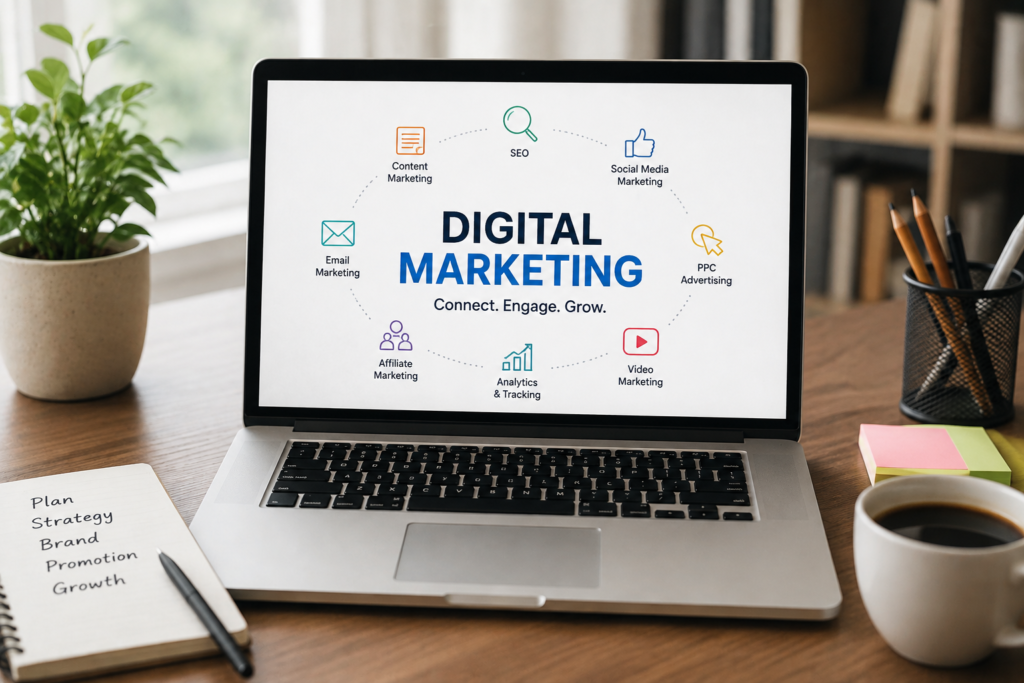
Digital marketing is the act of promoting products, services or brands using tools and websites. Digital marketing uses ways such, as search engines, social media, email, websites and mobile apps to talk to possible customers.
Unlike marketing Digital marketing lets businesses speak to a worldwide crowd watch how campaigns work right now and change their plans based on numbers and how customers act.
Simple Definition
Digital marketing is the way to advertise and sell products or services through methods to draw in keep and turn customers into buyers.
Why Is Digital Marketing Important?
The internet has changed how people look for things buy stuff and talk to brands. If a business does not build an online presence that business might lose many customers to other companies.
Here are some big reasons why digital marketing is important:
* Digital marketing is cheaper than ways of advertising.
* Digital marketing lets you talk to groups of people.
* Digital marketing lets you see how well you are doing away.
* Digital marketing helps more people see and know your brand.
* Digital marketing helps you talk and connect with customers more.
* Digital marketing brings in leads and more sales.
* Digital marketing lets you reach the world without any borders.
Types of Digital Marketing
To really understand marketing you need to know the different parts of digital marketing.
1. Search Engine Optimization (SEO)
SEO is a way to fix a website so it shows up higher on search engines like Google. The goal of SEO is to get free visitors by making the website easy to find.
Things you do for SEO include:
* Keyword research
* On-page optimization
* Technical SEO
* Link building
* Content creation
When you do SEO the way SEO helps businesses find people who are already looking for what the business sells.
2. Content Marketing
Content marketing is about making useful things to read or watch to get people interested.
Some examples are:
* Blog posts
* Articles
* Videos
* Infographics
* E-books
* Case studies
Good content builds trust. Helps you make friends with your customers for a long time.
3. Social Media Marketing
Social media marketing means showing off your brand on sites like:
* Twitter (X)
* YouTube
Businesses use media to chat with customers make people know the brand and get more people to visit their website.
4. Pay-Per-Click Advertising (PPC)
PPC is a way to pay for ads where you only pay when someone actually clicks on the ad.
Common PPC places are:
* Google Ads
* Facebook Ads
* Instagram Ads
* LinkedIn Ads
PPC helps businesses get visitors and new leads fast.
5. Email Marketing
Email marketing is still one of the ways to do digital marketing.
This means sending out:
* Newsletters
* Promotional offers
* Product updates
* recommendations
A good email campaign can help you keep your customers and sell much more.
6. Affiliate Marketing
Affiliate marketing is when people or partners talk about your products and get a small payment, for every sale they help make.
This way of working helps businesses find people while keeping the risks low.
7. Influencer Marketing
Influencer marketing is when a brand works with media stars who have many followers.
Brands use the trust those stars have to show off products and make people trust the brand too.
How Does Digital Marketing Work?
For clarity of the concept, let us consider an example of the digital marketing process:
Step 1: Determine the Target Market
Understand your ideal customers based on:
Age
Gender
Interest
Geography
Internet activities
Step 2: Provide Useful Content
Create content aimed at solving the problem of customers.
Step 3: Select Marketing Channels
Choose proper platforms including:
Search engine marketing
Social media marketing
Email marketing
PPC
Step 4: Get Traffic
Drive traffic using SEO, PPC, social media marketing, and content marketing.
Step 5: Convert Traffic into Customers
Improve landing pages and calls to action.
Step 6: Analyze and Optimize
Evaluate your marketing performance with the help of analytics software and optimize further.
The Advantages of Digital Marketing
There are many benefits of digital marketing for different organizations.
Measurable Campaigns
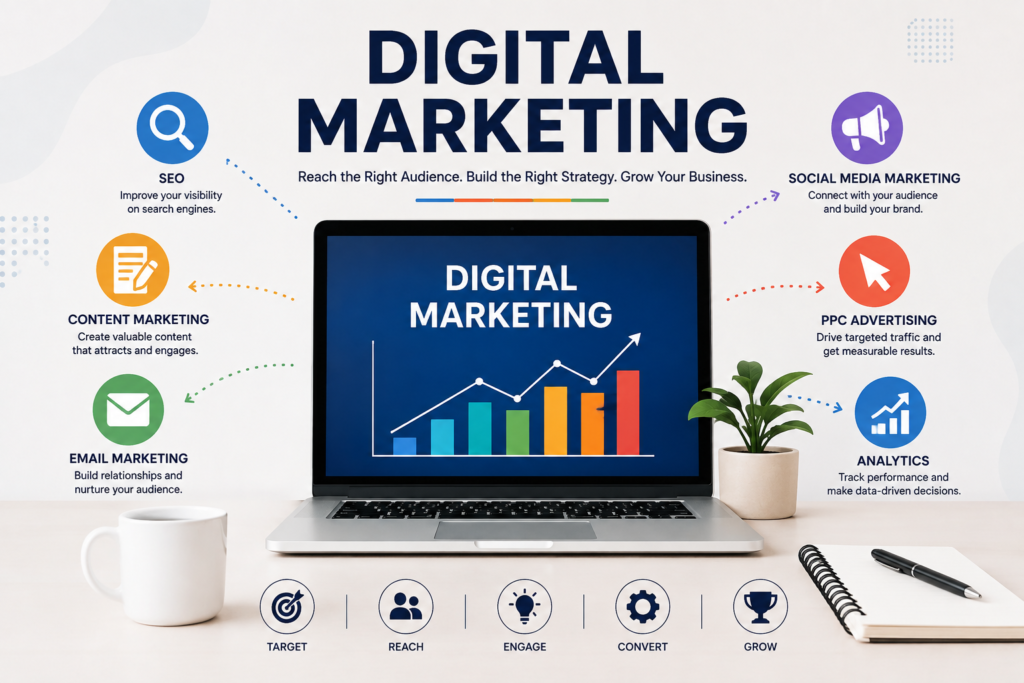
With the help of such software as Google Analytics, businesses can evaluate traffic, conversions, and behaviors of users.
Effective Customer Segmentation
Businesses can segment customers according to their demographical information, interests, and activities on the Internet.
High Return on Investment (ROI)
As compared to traditional marketing campaigns, the digital ones cost less but have higher ROI.
Improved Brand Credibility and Recognition
Regularly appearing in the online environment will increase the company’s credibility and recognition.
Improved Customer Communication
Thus, digital marketing is much more flexible and controllable than traditional one.
Digital Marketing Essential Tools
The digital marketing tools that can be utilized include:
Google Analytics
Google Search Console
SEMrush
Ahrefs
Canva
Mailchimp
HubSpot
Meta Business Suite
The tools above assist marketers to analyze, design and improve campaign performance.
The Future of Digital Marketing
The digital marketing industry continues to develop and new trends emerge. The future trends in digital marketing include:
Artificial Intelligence (AI)
Voice Search Optimization
Video Marketing
Marketing Automation
Personalization
Chatbots
Augmented Reality (AR)
The businesses that will embrace the trends will have competitive advantage in the digital marketing.
Conclusion
Today, the digital marketing is one of the key drivers of the growth of businesses. If you are a business owner, entrepreneur, a student or just a marketer, it is important to know the basics of digital marketing in the modern online world.
Digital marketing can be defined as the process of promotion of goods and services via digital means in order to attract, engage and convert consumers. It includes SEO, content marketing, social media marketing and paid advertising and much more.